
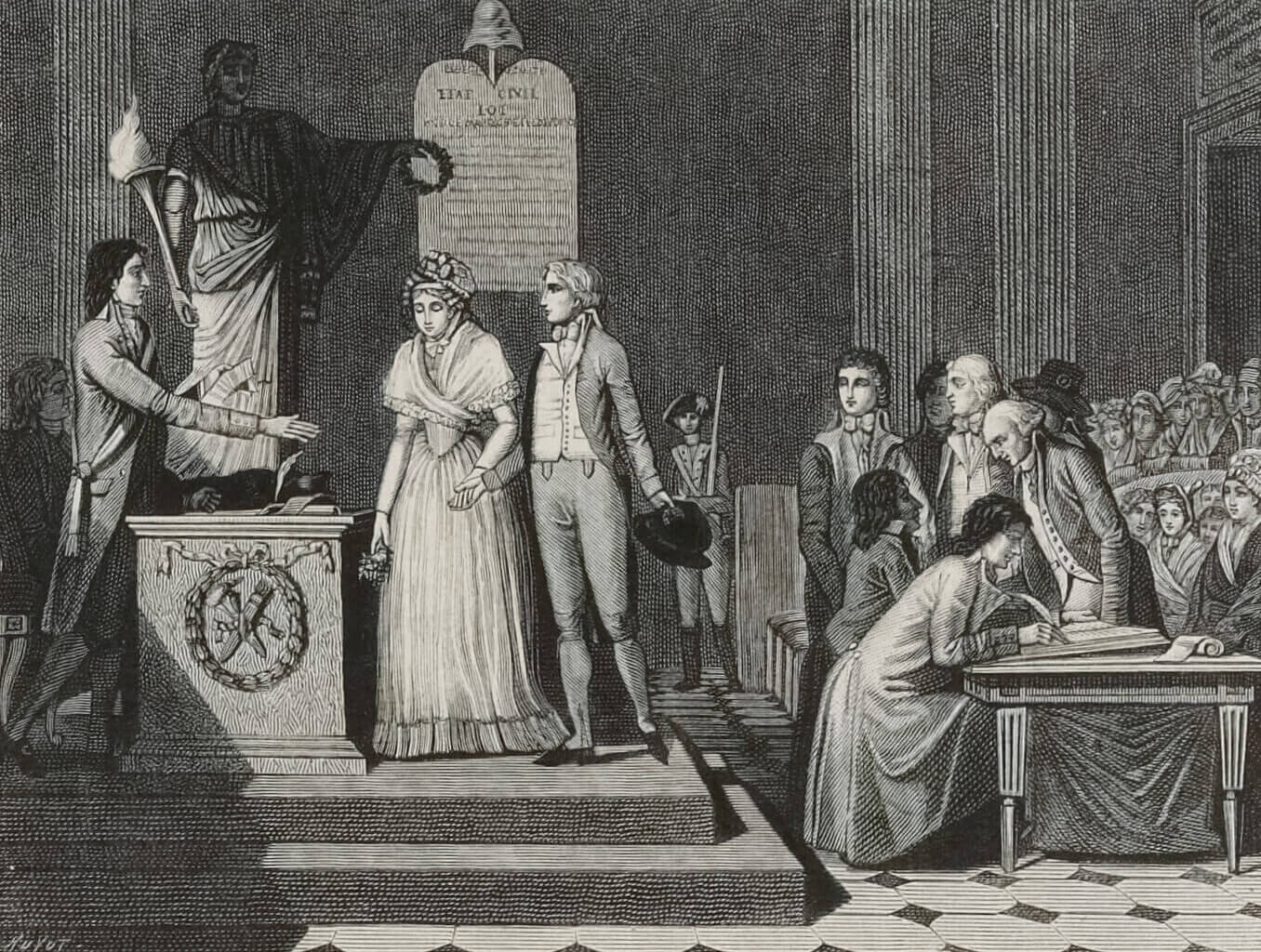
This article is the first in a series on How to Find French Vital Records, where we will explore French Civil Vital Records (post 1792).
The civil registration system came into effect in 1793 during the French Revolution. It replaced Catholic parish registers as the official means of recording vital events.
While many of these records are available online on various family history platforms, there is still a large amount of unindexed digital collections as well as offline records for you to explore.
Where Are French Civil Records Archives Located?
French civil records are held by various institutions. The first question to ask is, therefore, which institution holds the record you need.
But before that, you should know the pattern these records typically follow:
– Records are created at the town hall, and recent registers remain there.
– Older registers, are transferred to an archive service.
– Specialized national repositories hold records for particular populations or territories.
The Town Hall — The Starting Point
Civil records are entered into registers at the town hall of the commune where the event took place.
Records are entered consecutively in a register, with several records usually appearing on each page. Each record is assigned a sequential number.
Terminology
Etat civil
The French system of civil registration.
Registre
A register, i.e. the physical or digitised volume/book containing civil records.
Acte
A record or entry: an individual birth, marriage, death, or other civil record.
Mairie
The town hall.
Commune
The basic administrative unit in France roughly equivalent to a municipality, town, or village). France is divided into over 34,000 communes, ranging from major cities like Paris and Lyon to tiny rural hamlets.
Département
A department i.e. an administrative division of France that is VERY roughly comparable to a county. Each department contains multiple communes.
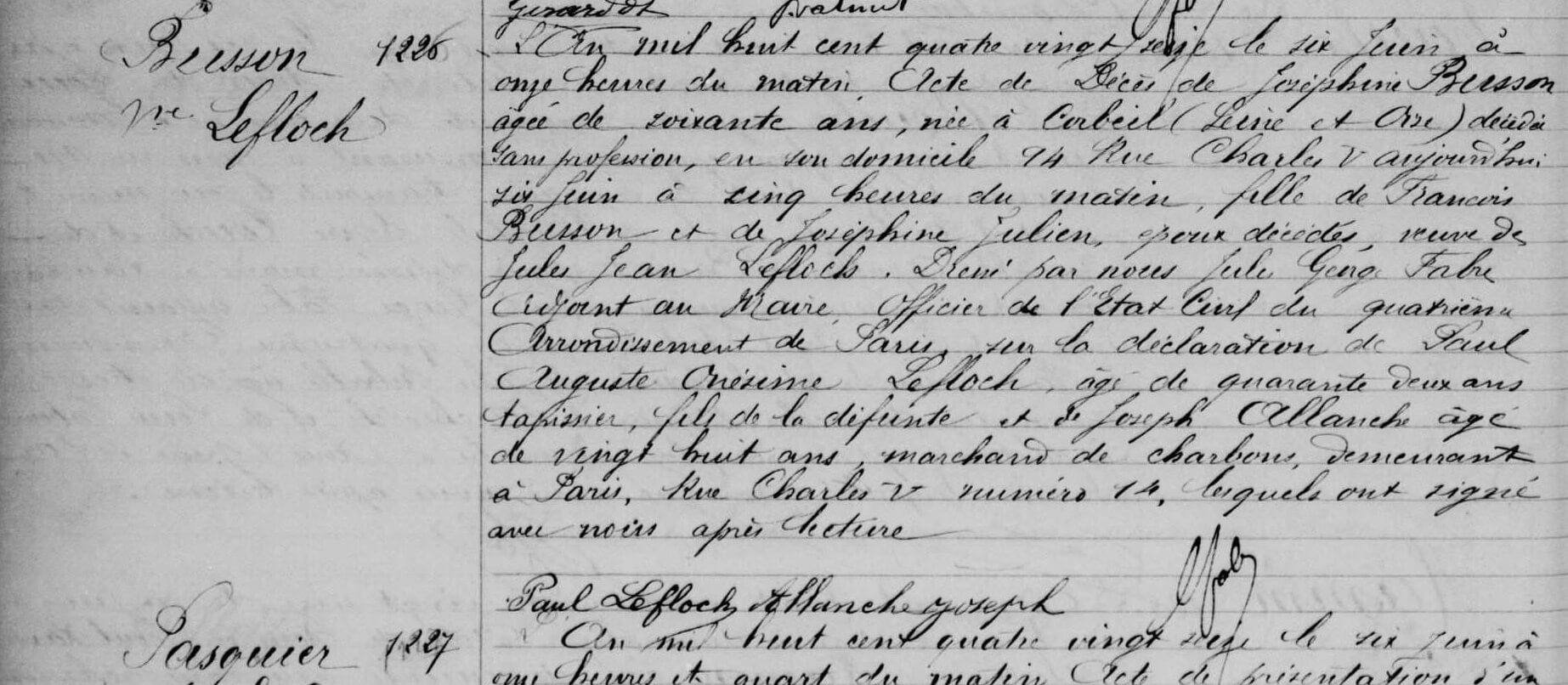
Extract from a French death register, Corbeil, 1896. Entry 1226 and 1227 appear consecutively in the register.
Source: Departmental Archives of Essonnes.
When Records Move to the Archives
Civil records are typically created in duplicate, with each copy following a distinct path and timeline.
The Townhall copy
The town hall copy of the register is maintained by the local registrar, who utilizes it to issue certified copies and to record marginal annotations (that include subsequent marriages, divorces, or deaths depending on the type of event). Once a register reaches 120 years of age, it is transferred to an archive service.
The court copy
Each year, a second copy of the register is sent to the local court. The court retains this copy for a period of 75 years before transferring it to a historical archive, namely the Departmental Archives discussed below.
One copy may therefore still be at the town hall while the other has already been archived.
The Departmental Archives – The Main Destination
The Departmental Archives receives court copies of civil registration registers and frequently receives town hall copies after the applicable retention periods. However, their collections include a wide range of additional materials, such as parish registers, notarial records, census returns, military conscription lists, land and property records, newspapers, and numerous other local sources.
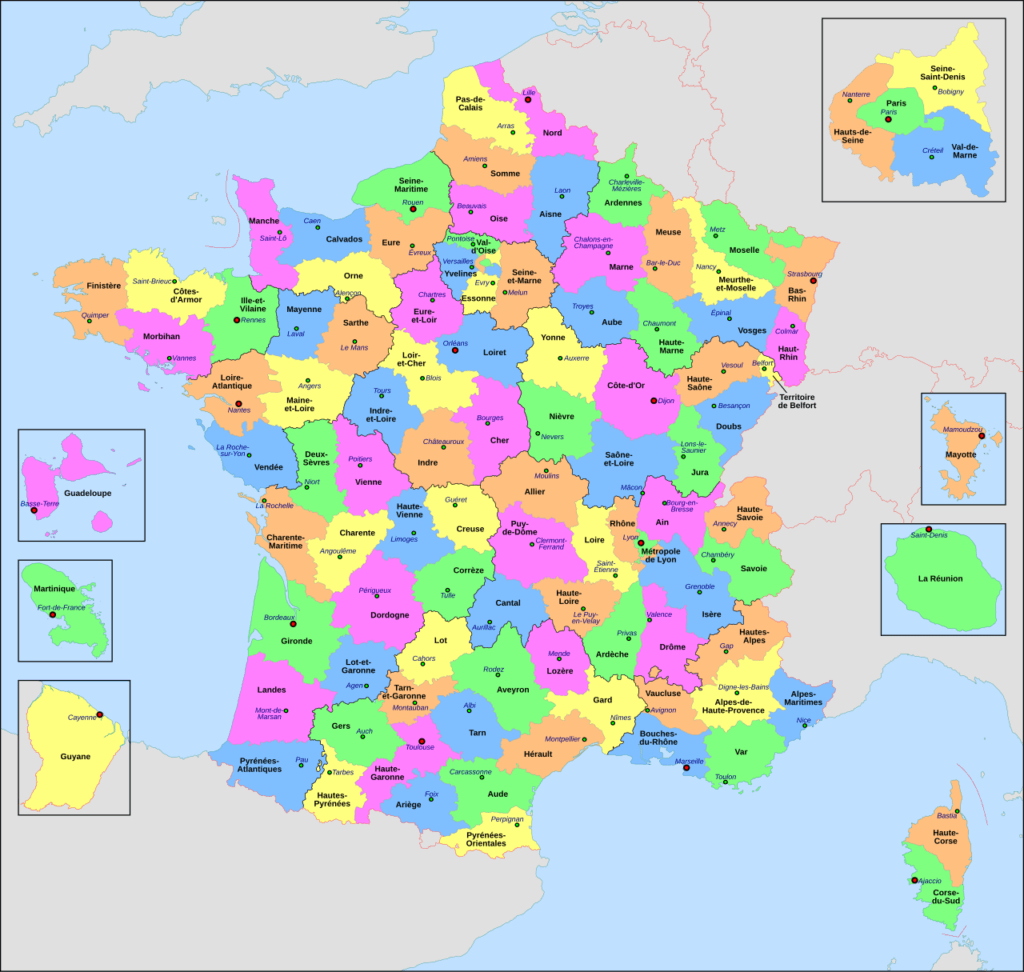
Prior to the French Revolution, France was divided into provinces. During the revolutionary period, the country was reorganized into administrative divisions called ‘départements’ (departments). There are currently 101 departments in France.
Source: Nilstilar, CC BY-SA 4.0 , via Wikimedia Commons
For most family history research involving older records, the Departmental Archives is the main destination.
Municipal Archives — For Large Cities and Towns
As long as proper archival conditions are maintained, communes with a population of 2,000 or more are not required to transfer their old registers to the Departmental Archives. Some communes maintain a dedicated municipal archive service (Archives Municipales). Cities such as Paris, Lyon, Marseille, Bordeaux and Rennes have extensive municipal archives that include historical civil registration records alongside many other local documents.

The façade of the Lyon Municipal Archives.
Source: Pemberlaid, via Wikimedia Commons.
However, bear in mind that even for these cities, the court copy of the registers is still sent to the departmental archives. Therefore, the two institutions may hold different versions of the same register.
Specialised National Repositories
While most French civil records are organized geographically at the municipal or departmental level, several categories of record are held by specialized national repositories. Each repository has its own access and publication policies. These include:
French citizens abroad
Former French territories
Beyond Births, Marriages and Deaths
Although French civil registration primarily records births, marriages and deaths, the registers also include other related events.
In Births Registers
Acknowledgment of parenthood (reconnaissance)
Since the Civil law, inherited from the Napoleonic Code of 1804, and until recently, a child born outside of marriage could not have a legal filiation to a parent until they were officially recognized. In most cases, it was the mother who did so, and the child would bear her name, as the father was very often listed as ‘unnamed’. Despite the recognition, the child was still considered a ‘natural child’ (enfant naturel) and could not claim the same rights as a legitimate child, notably in terms of inheritance.
Foundlings (Enfants trouvés)
Occasionally, birth registers record a foundling. In addition to the date, place and circumstances of discovery, the child’s apparent age and sex were specified, as well as any clothing, objects or documents found with the child. A name was usually given to the child.
In Marriage registers
Marriage banns (publications de mariage)
Before the marriage, the intentions of marriage had to be made public. Marriage banns were typically published twice in the weeks before the couple got married. The banns were exposed in the places where each would-be spouse lived. Records of marriage announcements may be kept separately from the actual marriage registers.
Divorce
Divorce was legalized in France in 1792. It was then restricted under Napoleon, abolished in 1816, and reinstated in 1884, albeit under restrictive conditions. Beginning in the late 19th century, some divorce judgements were transcribed in full in the marriage register for the location of the marriage.
In Death Registers
Stillborn children (Enfant sans vie)
Death registers also contain records of stillbirths. These children were not given names; instead, their sex and the date and time of death were noted, along with the names of their parents.
The history of civil registration in France covers more than two centuries and was subject to a number of laws and regulations. It is still being modernized to this day. Although there are always legal or historical exceptions and local peculiarities, having an understanding of the general principles is still very helpful for successful research.
Join the list
Subscribe to RFMM Newsletter! Once a month we share one useful tip, coupons and one bit of French history, all in English.